
When guessing stops working
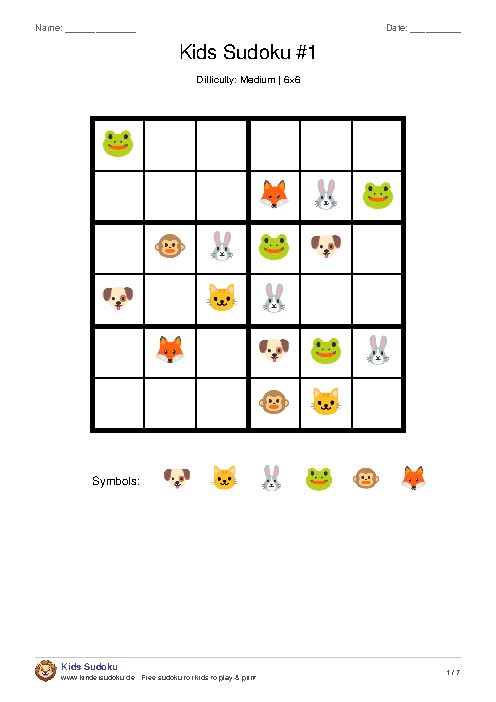
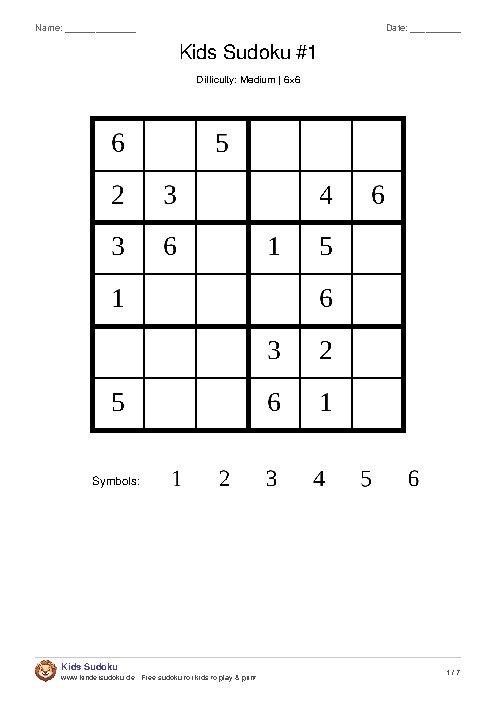
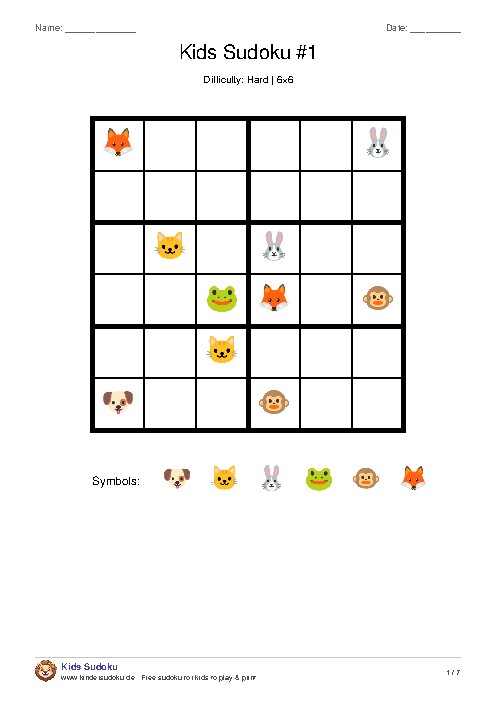
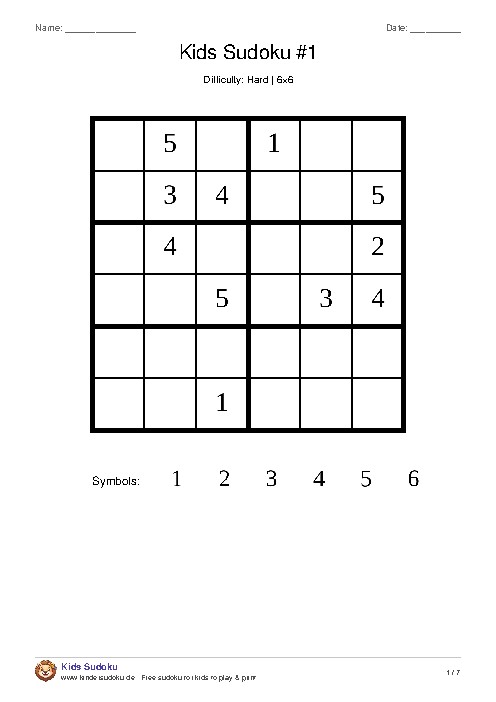
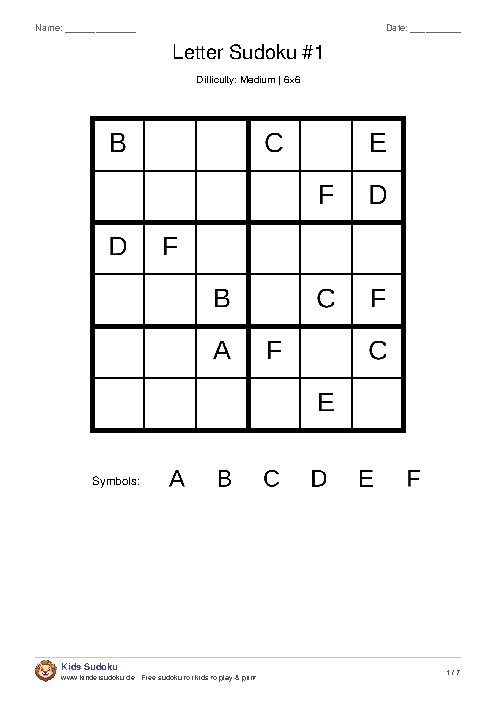
By 7, many children solve 6×6 on “Easy” without much effort. On “Medium”, only 14 to 17 of the 36 squares are given; on “Hard”, 10 to 13. Trial and error doesn’t get you far here – to make progress, you need a method. That is exactly what makes this stage exciting.
Two strategies to practice
- What’s missing here? Find a row, column or box with five symbols – the sixth is then obvious.
- Where can it go? Choose one symbol, say the 3, and check box by box where it can still go. Every row and column that already has a 3 is ruled out. If one square is left – write it in.
On paper, a pencil helps: if unsure, write two possible numbers small in the corner of the square and erase the wrong one later.
Tips for parents
- Reasons, not guesses: “How do you know the 5 goes here?” – this question does more than any hint.
- Let them find mistakes: compare with the answer page and go through the wrong row together.
- Pictures aren’t “too easy”: animals, numbers or letters – the logic is the same. Let your child choose.
- A small puzzle every day: the daily sudoku comes in 6×6 too.
When “Hard” works reliably, it’s time for the first 9×9 – more on that in sudoku for 8-year-olds. The stage before is described in sudoku for 6-year-olds.
Sudoku for 7-Year-Olds – printable PDF worksheets
Each PDF has 6 puzzles on A4 paper and the answers at the end – just tap, download and print.
Frequently asked questions
My child just guesses – what can I do?
Ask them to explain each square they fill in. And show them the question “Where can this symbol still go in this box?” – that turns guessing into a plan.
When can my child try a 9×9 sudoku?
When 6×6 on “Hard” works without help. Many children are around 8 by then.
Last updated: