New in 6×6: rectangular boxes
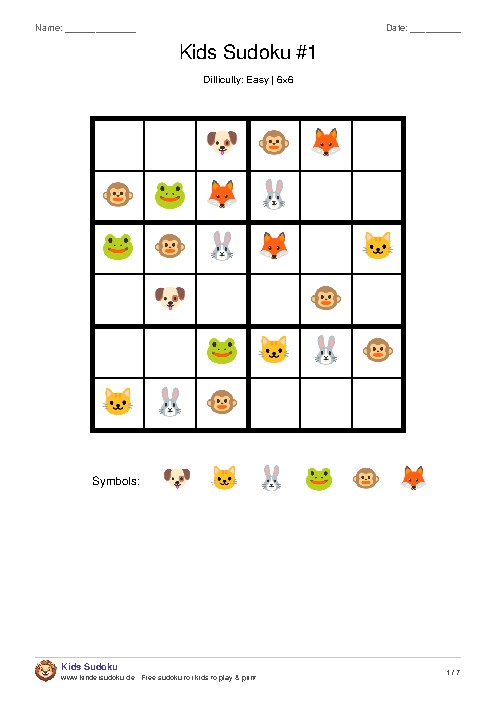
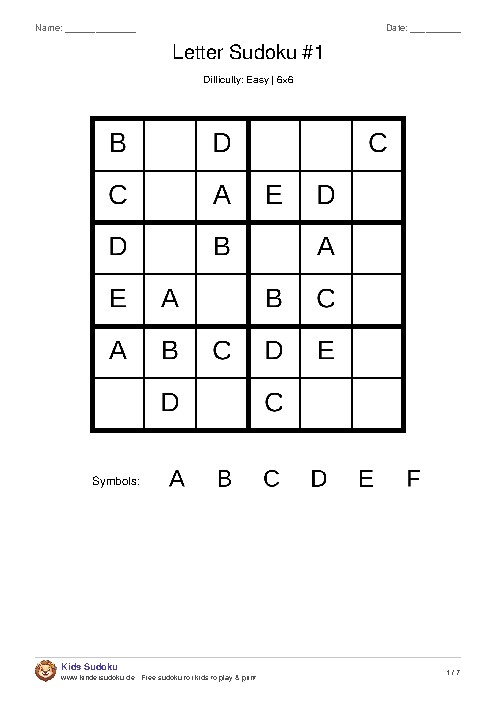
At around 6, many children are ready for the 6×6 sudoku: 36 squares, six symbols – and boxes that are 2 squares high and 3 squares wide. This is the most common stumbling block, because from the 4×4 kids only know square boxes.
It helps to trace the thick lines together before the first puzzle: “This is one box – every animal has to go in here once.” On “Easy”, 18 to 22 squares are given, which is plenty of support for the switch.
Numbers and letters from school
In their first school year, children learn digits and letters. Both work as sudoku symbols:
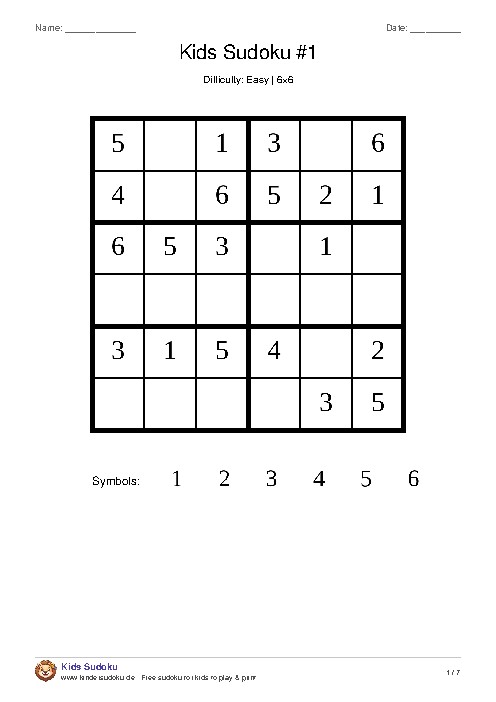
- Numbers 1 to 6 in the 6×6, or 1 to 4 in the 4×4 – without any adding up.
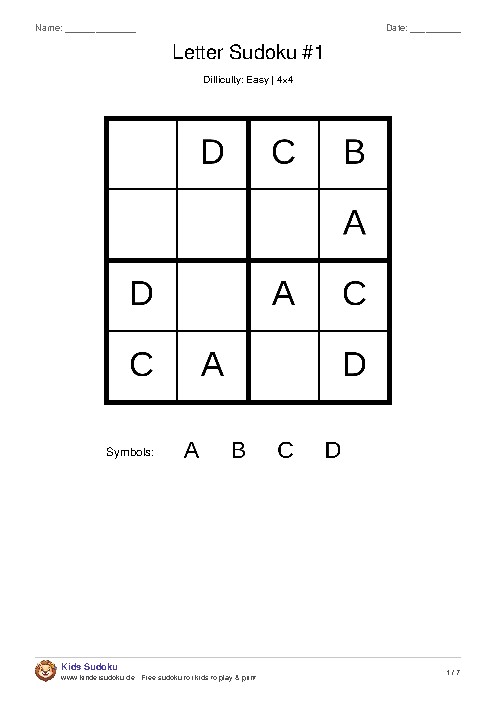
- Letters A to F in the letter sudoku – a good match for learning the alphabet.
On paper, your child writes each missing number or letter into the square, practicing handwriting along the way.
Tips for parents
- Change the size first, then the symbols: solve the first 6×6 with animals. Numbers or letters come once the bigger grid feels familiar.
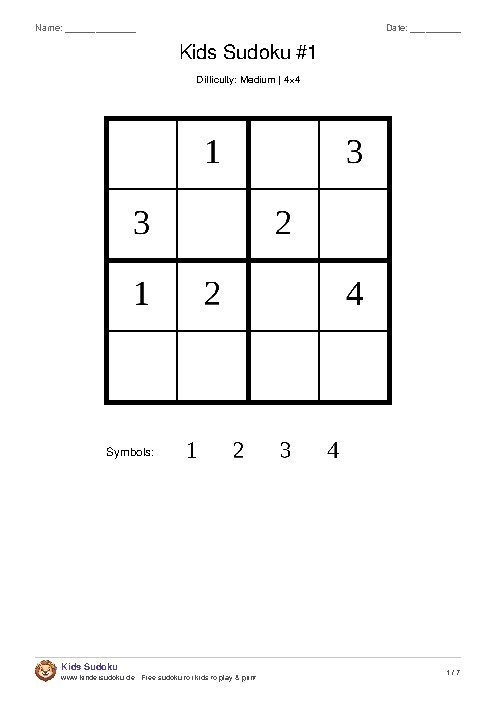
- Going back isn’t a step back: if 6×6 gets frustrating, slip in a few 4×4 puzzles on “Medium”.
- Self-checking: the answer page at the end of every PDF shows whether everything is right – the given squares are shaded gray there.
- Starting school: the back-to-school sudoku with backpacks and pencils has its own worksheets.
When 6×6 on “Easy” goes well, continue with sudoku for 7-year-olds. Never played sudoku before? Then even at 6, start with a few puzzles from sudoku for 5-year-olds.
Sudoku for 6-Year-Olds – printable PDF worksheets
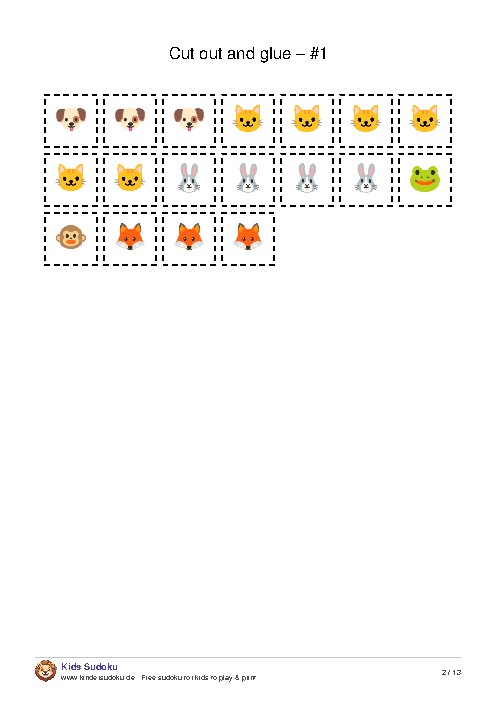
Each PDF has 6 puzzles on A4 paper and the answers at the end – just tap, download and print. The “cut-out” sheets come with a page of the missing pictures for each puzzle.
Frequently asked questions
4×4 or 6×6 – what suits a 6-year-old?
Kids who already solve 4×4 confidently start with 6×6 on “Easy”. Complete beginners are better off starting with a few 4×4 puzzles, even at 6.
How are the boxes split in a 6×6?
Into six boxes of 2 rows and 3 columns each. The thick lines show where the boxes are.
Last updated: